
Table of Contents

Affresh washing machine cleaner vs. DIY Washer Cleaners
Let’s be honest, no one thinks about cleaning their washing machine until they pull out laundry that smells worse than before. If you notice musty odors, detergent residue, or black mold spots, it’s time to give your washer a deep clean.
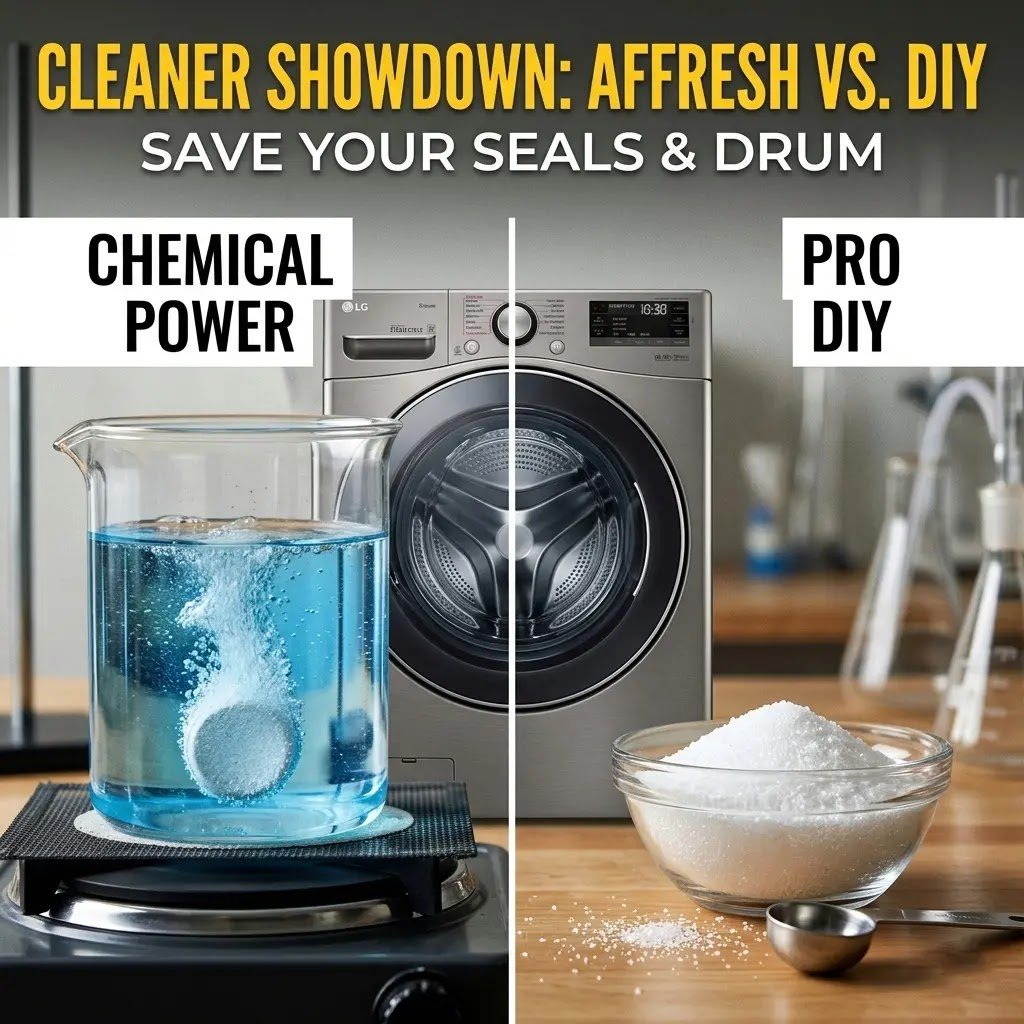
The real question is whether you should use a specialized cleaner like Affresh or opt for DIY options, such as vinegar, baking soda, and citric acid. I tested both methods to determine which one works best and which could potentially harm your machine over time. Here’s the honest breakdown with no marketing talk, just real results.
I’ve seen too many melted gaskets caused by the old-school vinegar and baking soda myth. In 2026, we need to treat our smart washers with more respect. Here is my breakdown of what actually works without ruining your machine.
Read more: Washing Machine Cleaner Not Working? The Biofilm Secret
Why Your Washing Machine Needs Cleaning
Before we dive into the comparison, let’s understand why your washing machine gets dirty in the first place:
- Detergent buildup clings to the drum and hoses.
- Hard water minerals leave chalky deposits on internal parts.
- Moisture encourages mold and mildew, especially in front-loaders.
- Dirt and lint from clothes accumulate over time.
Understanding Biofilm (Why DIY often fails)
DIY cleaners like baking soda only neutralize surface odors. They cannot penetrate Biofilm, a bacterial slime that lives behind the outer drum. Affresh contains an oxygen-releasing agent (Sodium Percarbonate) that literally bubbles the slime off the hidden metal surfaces. This is why Affresh results last 4 weeks while DIY lasts only 10 days.”
If left uncleaned, your washer can:
- Make clothes smell musty
- Reduce cleaning performance
- Shorten the machine’s lifespan
Affresh Washing Machine Cleaner: The Pros and Cons
What It Is
Affresh is a trusted cleaner designed specifically for washing machines. It’s available in tablet or powder form and contains oxygen-based bleach and citric acid to dissolve grime and mineral buildup. You can find it easily on Amazon, at Walmart, or at local appliance stores.
Affresh tablets include surfactants that lower the surface tension of water. This allows the cleaning solution to seep into the microscopic pores of the stainless steel drum. DIY mixes (vinegar/soda) lack this ‘wetting’ ability, which is why they often miss the buildup hidden in the drum’s perforation holes.
The 2026 Expert Method: The 90°C Thermic Shock
Don’t just toss the tablet and press start. To get 100% value out of Affresh or any professional cleaner, you need to trigger a thermic shock. Most ‘Normal’ or ‘Quick’ cycles don’t get hot enough to activate the oxygenating agents in the cleaner.
Follow these 4 pro steps:
- Select the Hottest Cycle: Choose Sanitary, Allergiene, and Tub Clean. If your LG has a manual temp setting, crank it to 90°C (194°F).
- The Empty Load Rule: Ensure the drum is 100% empty. Even a single stray sock can soak up the cleaning solution, preventing it from reaching the outer drum where the mold lives.
- Place Tablet Directly in Drum: Do not put Affresh in the dispenser drawer. It needs to dissolve directly in the main pool of water to reach peak concentration immediately.
- The Mid-Cycle Pause: For machines with heavy buildup, pause the cycle for 20 minutes once the water is hot. This soak phase allows the surfactants to penetrate the thickest layers of biofilm before the final rinse.
Pros
- Very effective on tough residue and mold
- Removes odor-causing bacteria instead of masking smells
- Safe for all washers, including HE models
- Simple to use with no measuring or mixing
Cons
- More expensive, usually $5–$10 for six tablets
- Contains cleaning agents that may not suit those preferring all-natural products
- Sometimes unavailable in smaller local stores
My Test Results
After cleaning my front-loading washer with Affresh, the drum looked brighter and cleaner. The musty odor disappeared completely and stayed gone for about three weeks before I needed another cleaning tablet.

DIY Cleaning: The Model-Specific Truth (Vinegar vs. Citric Acid)
If you prefer a DIY approach over commercial tablets, you must choose your “acid” based on your machine’s age. The traditional vinegar and baking soda method is no longer a “one size fits all” solution.
- For Newer Models (HE & AI-Powered): Modern LG and Samsung washers use specialized NBR (Nitrile Butadiene Rubber) seals. Vinegar’s acetic acid is too harsh and can make these seals brittle over time, leading to slow internal leaks. For these units, replace vinegar with 1 cup of pure citric acid powder. It descales the heating element and drum just as effectively but is 100% pH-safe for modern rubber gaskets.
- For Older Models (Traditional Top-Loaders): If you have a 10+ year-old machine with thick, heavy-duty rubber, the classic vinegar and baking soda method still works for light maintenance. It’s a cheap way to neutralize odors, but remember it lacks the “surfactants” found in Affresh, meaning it won’t be able to peel off heavy biofilm (that gray slime) from the outer tub.
Verdict for 2026: Use citric acid as your primary DIY cleaner to stay safe. If you still choose vinegar for an older machine, never use more than 2 cups and always follow it with an extra rinse to ensure no acid stays in contact with the seals.
The Invisible Killer: Hard Water Cementing
If you live in an area with hard water (high mineral content), your detergent and minerals combine to form a scum that eventually becomes hard as rock on the outer drum. This is where most DIY cleaners, especially vinegar, fail miserably. They are simply too weak to dissolve these ‘cemented’ deposits.
To prevent your heating element from burning out, you need a chelating agent found in professional cleaners like Affresh. If you are strictly pro-DIY, you must use a professional-grade descaler once a quarter. Ignoring this ‘invisible cost’ is the leading reason why machines start taking longer to heat water and eventually suffer from motherboard-killing power surges.
Affresh vs. DIY: Head-to-Head Comparison
| Feature | Affresh (2026) | Citric Acid (Pro DIY) | Vinegar (Old DIY) |
|---|---|---|---|
| Biofilm Removal | ⭐⭐⭐⭐⭐ (Excellent) | ⭐⭐⭐☆ (Good) | ⭐☆☆☆ (Poor) |
| Rubber Safety | 100% Certified | High (pH-balanced) | Low (Corrosive) |
When to Use Affresh vs. DIY
Choose Affresh If You
- Have visible mold or mildew
- Own a front-loading washer that traps moisture
- Want a powerful, reliable clean with minimal effort
- Don’t mind spending a few extra dollars
Choose DIY If You:
- Need a quick and eco-friendly refresh
- Own a top-loader with less mold risk
- Prefer natural cleaning methods
- Clean your washer regularly for light maintenance
The Verdict: Which One Works Better?
For most households, the best solution is to use both methods strategically:
- Use Affresh every two to three months for a deep clean.
- Use vinegar and baking soda monthly for maintenance.
Exception: If your washer already has mold or a strong odor, skip DIY and go straight to Affresh, or use a diluted bleach cycle for severe buildup.
3 Pro Tips to Keep Your Washer Cleaner Longer
- Pro Tip: Manual Gasket Evacuation: After the 90°C cycle finishes, the cleaner will have loosened the grime, but it might not have flushed it all out. Use a microfiber cloth to wipe inside the rubber gasket fold. You’ll likely find a grey ‘sludge’ that the machine couldn’t drain. Removing this manually is the difference between a clean-smelling washer and one that starts smelling again in a week.
- Use less detergent, as excess soap causes buildup.
- Clean the filter and detergent tray monthly, since they often trap residue.
Frequency Calibration
Don’t just clean once a month. Modern LG and Samsung machines have a Cycle Counter. After 30 loads, the machine is technically dirty. If you have a large family, you might need Affresh every 15 days. Rely on your usage frequency, not the calendar.
Final Thoughts
My pro-tip? Use citric acid for your monthly maintenance and keep Affresh for that quarterly deep clean. This hybrid approach saves you $40 a year and keeps your drum’s spider-arm from corroding.
🧼 Professional Washer Maintenance Resources
Before you choose your cleaning method, explore our 2025/2026 performance reviews and DIY descaling hacks:
- → Affresh Review 2025: Does It Really Work? My Honest Experience A deep dive into the chemical efficiency of Affresh tablets after 30 days of testing.
- → Stop Buying Affresh! 5 Expert DIY Alternatives That Actually Work Beyond vinegar and baking soda, discover the high-performance DIY mixes used by pros.
- → How to Descale a Washing Machine: 2026 Citric Acid Guide The safest way to remove hard water scale without damaging your machine’s rubber seals.
Have you tried either method? Share your experience in the comments below!