
Table of Contents
Washing Machine Gasket Mold?
The Definitive Manual for Deep Cleaning Front-Loading Washing Machine Seals
I. Introduction: The Tablet Deception
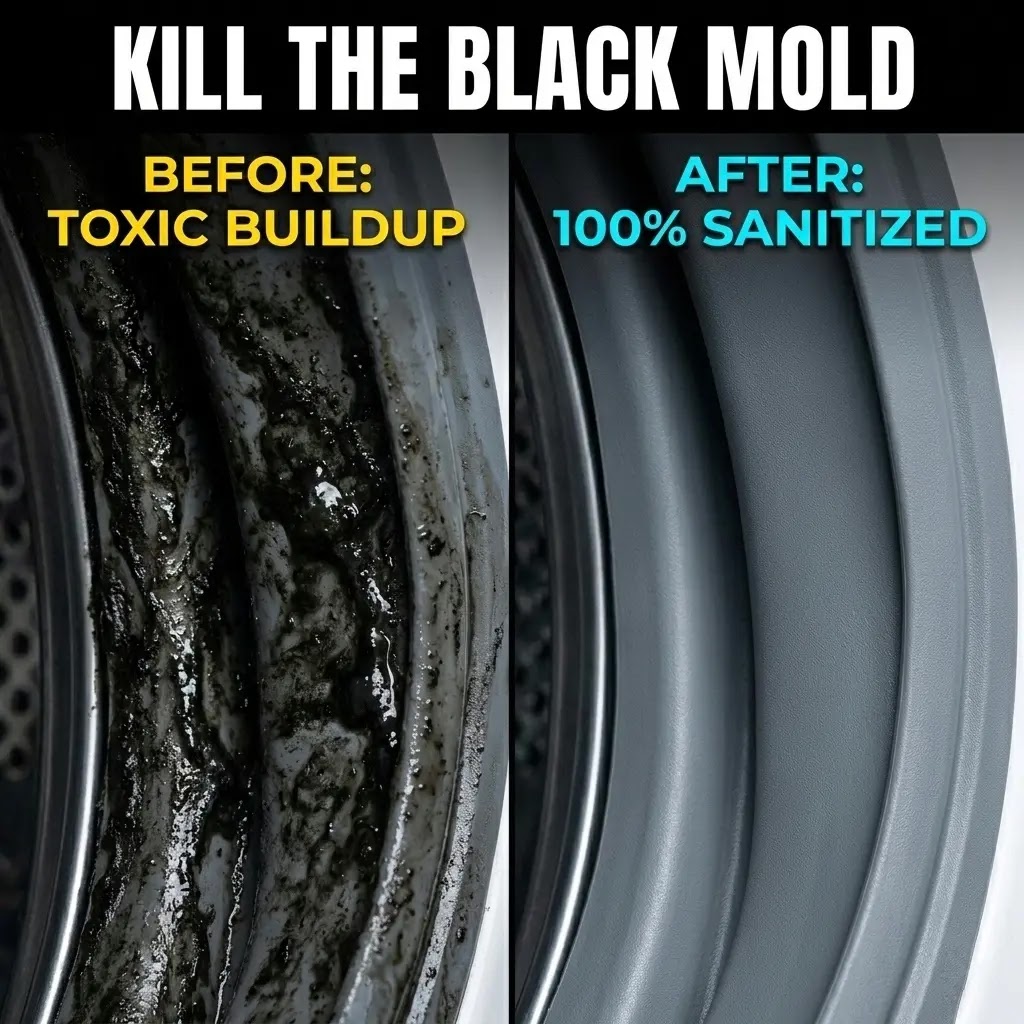
Most homeowners believe that dropping a cleaning tablet into their washing machine solves the hygiene problem. This is a myth. While tablets are excellent at removing limescale and debris from the hidden rear of the drum, they rarely touch the door’s rubber seal (the gasket).
If you find that your regular maintenance isn’t giving you the results you expected, you might be facing a deeper issue explained in Washing Machine Cleaner Not Working? The Biofilm Secret. Understanding this hidden layer is the first step to a truly clean machine.
The Health Risk: That black slime isn’t just an eyesore; it is a colony of mold. Every time you wash clothes, water splashes against this mold, releasing fungal spores and allergens into your fabrics. If your clean laundry smells slightly damp or musty, your gasket is likely the culprit.
Think of it this way: taking a shower cleans your body, but it doesn’t brush your teeth. A drum clean cycle cleans the machine’s body, but the gasket needs its own specific, manual brushing.
II. Anatomy of a Gasket: Where Mold Hides
To clean a gasket, you must understand its design. It isn’t just a simple ring of rubber; it is a complex, multi-folded seal designed to flex as the drum spins. The most dangerous area is the Hidden Pocket.
If you notice that your clothes are coming out with mysterious stains even after cleaning this area, you should check out LG Washer Leaves Black Marks on Clothes. 5 Fast DIY Fixes! as the residue might be coming from behind the drum.
There are typically two folds. The outer fold is visible, but the inner fold, located near the bottom, stays perpetually wet. If your machine is even slightly unlevel, water pools in this fold. This stagnant, warm, soapy water becomes a nursery for mold growth.
III. The Paper Towel & Bleach Soak (The Expert Hack)

Scrubbing with a brush often fails because the mold has rooted into the porous rubber. To kill it, you need extended contact time. This is the professional technician’s secret.
Step-by-Step Procedure:
- Soak thick paper towels in undiluted liquid chlorine bleach.
- Pull back the rubber fold and stuff these soaked towels deep into the moldy areas.
- Press them firmly so the bleach is in direct contact with the stains.
- Leave them for 2 to 3 hours. (This is the contact time theory; the bleach needs time to break the mold’s cellular wall.
Safety Warning: Bleach fumes are strong. Ensure the laundry room window is open. Always wear rubber gloves to prevent chemical skin burns.
IV. The Drain Hole Clearance

Look at the very bottom of your gasket. You will see three small holes. These are the drain holes. Their job is to let water return to the outer tub. However, these holes are magnets for lint, hair, and coins.
If these holes are clogged, the gasket will never dry out. Use a Q-tip or a small wooden stick to clear any debris. If you don’t clear these, your mold will return within days of cleaning.
V. Beyond the Surface: The Outer Tub Gunk
Sometimes the mold isn’t just on the gasket; it is hiding on the metal lip of the outer tub where the rubber meets the frame.
CRITICAL PRO CAUTION: When inspecting this area, only pull the rubber lip back gently. Do not pull the entire gasket off the metal frame. The seal is held by a high-tension steel spring wire. If you dislodge this spring, the gasket will leak, and you will need a specialized spring expansion tool to put it back on. Use a flashlight to peek behind the fold and clean with a soft toothbrush.

VI. Material Science: The Chemical Conflict
There is a constant debate in the cleaning community regarding the best chemicals to use. While bleach is a powerful killer for mold, it can be harsh on certain parts.
For a broader look at what professionals recommend for the entire machine, our guide on the Best Washing Machine Cleaners 2025: A Simple Guide to a Fresh Washer provides a breakdown of safe and effective options that won’t damage your seals or stainless steel drum.
- Bleach (The Killer): Sodium hypochlorite destroys mold spores instantly.
- Technical Warning: Bleach is highly corrosive to 304 stainless steel (the drum material). After performing the paper towel soak, you must run an extra rinse & spin cycle to remove all chlorine residue. If left on the metal, it can cause pitting corrosion (permanent tiny rust holes in your drum).

- Vinegar (The Maintainer): Acetic acid is excellent for weekly prevention but weak for a crisis infestation. Never mix vinegar with bleach; it creates toxic chlorine gas.
The Pro Strategy: Use bleach for the initial deep clean to reset the machine. Use vinegar and baking soda for monthly maintenance wipes.
VII. Prevention: The Dry-Cycle Habit
Mold cannot grow without moisture. If you change your habits, you will never have to deep-clean the gasket again.
- The 1-Inch Rule: Never close the door fully after a wash. Leave it open at least an inch to allow humidity to evaporate.
- The Microfiber Wipe: Keep a dedicated cloth on top of the machine. After the last load of the day, wipe the bottom fold of the gasket dry. It takes 5 seconds.
- Internal Hygiene: Some users are now turning to high-heat methods for sanitization, but is it worth the risk? Read our analysis: Is Steam Cleaning Your Washer Safe? A material science review to understand how extreme heat affects your gasket’s lifespan.
- The Softener Warning: Liquid fabric softeners are made of animal fats and chemicals that leave a biofilm. This film is essentially food for mold. Switch to white vinegar in the softener compartment for a cleaner machine.
VIII. Final Verdict: When to Replace?
Sometimes, cleaning is a lost cause. Perform the Tear and Texture Test.
If the rubber feels sticky (melting) or has visible cracks, or if you find water leaking from the bottom of the door, it is time for a replacement. A new gasket costs between $80 and $150. While expensive, it is much cheaper than the thousands of dollars in floor damage caused by a sudden seal failure.
IX. Expert FAQs (From the Community)
Q: I’ve tried bleach, and the black stains are still there. Is it still mold?
A: Sometimes mold stains the rubber permanently, even after the spores are dead. If the surface is smooth and doesn’t smell, the mold is likely dead, but the pigment has bonded with the silicone/rubber. Replacement is the only way to get a new look.
Q: Can I use a pressure washer on my gasket?
A: Absolutely not. The high pressure can puncture the rubber or dislodge the internal spring clamps, leading to a massive leak during the next cycle.
Q: Why does my machine smell even though the gasket looks clean?
A: Check the detergent drawer and the drain pump filter. Often, mold grows in the soap tray, and the smell travels into the drum. The gasket is just one part of the ecosystem.
Summary & Conclusion
The gasket crisis is a result of trapped moisture and organic buildup. Cleaning tablets are not enough because they cannot reach the folds of the rubber seal. By using the Paper Towel Soak method, clearing the drain holes, and adopting the habit of leaving the door open, you can eliminate allergens and keep your machine running efficiently. A clean gasket equals truly clean clothes.