
Table of Contents
I. Introduction: The Steam Cleaning washing machine vs. Mechanical Reality
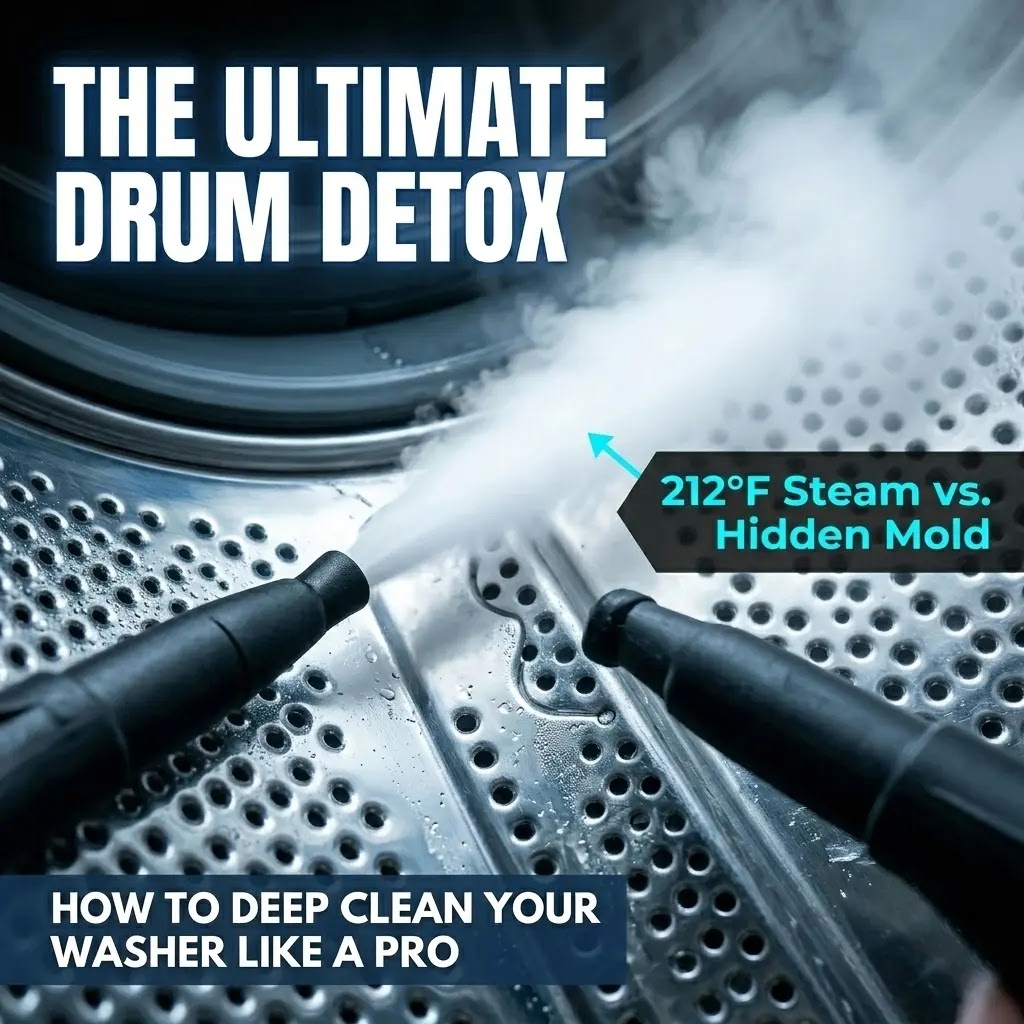
In 2026, many homeowners are avoiding strong chemicals like bleach or chlorine due to health concerns. This has made handheld steam cleaners very popular, as people view steam as a natural and safe way to sanitize surfaces. However, there is a serious conflict between this trend and how machines are actually built.
Engineers at brands like Samsung, LG, and Whirlpool design their machines to handle steam from the inside during controlled cycles. They do not design them to survive a high-pressure handheld steamer used by an operator from the outside. We will explore how 100°C steam can destroy a machine’s parts and oil.
II. Material Science: Impact of Heat on Polymers
Modern washing machines rely on advanced plastics and rubbers. Focused, extreme heat from a steamer can cause these materials to fail permanently.
The Gasket (EPDM Rubber)
Your door seal is made of EPDM rubber, which stays soft because of essential oils (plasticizers) inside the material. Direct steam forces these oils to leach out. This leaves the rubber dry, hard, and covered in micro-cracks. These cracks eventually cause leaks and become a breeding ground for mold.

The Outer Tub (Polypropylene)
Modern tubs are made of polypropylene plastic. This material has a heat limit (heat deflection temperature) of approximately 100°C.
The Logic: Just like a plastic spoon gets soft in hot tea, the plastic tub can warp or lose its shape from steam. This throws the drum out of balance, causing the machine to shake itself apart during the spin cycle.
III. The Silent Killer: Bearing Grease Liquefaction

The bearings help your drum spin smoothly. They are packed with thick, high-temperature grease protected by a lip seal. Steam is a pressurized gas that can easily push past these seals.
When steam hits the bearing, it turns the thick grease into a liquid, which then washes away. Without lubrication, metal rubs against metal, causing the bearing to rot from the inside out. This type of mechanical wear is a major reason for loud noises; for more details, see our guide on Washing Machine Repair: Spotting Faulty Motors Before They Fail to catch these issues early.
The Cost: Once bearings fail, the machine makes a loud roaring noise like a jet plane. In 2026, fixing this often costs more than the machine is worth, resulting in an economic total loss.
IV. Electronic Condensation: The Invisible Threat
Steam is pressurized moisture that can penetrate gaps where liquid water cannot. This vapor moves behind the control panel and gets under the protective conformal coating on the circuit board.
This moisture leads to green corrosion (oxidation). While the machine might work today, it will often develop intermittent faults. For instance, if you own an LG and start seeing error messages after a cleaning attempt, you should consult the LG Washer Repair Guide: Fix OE, LE, & UE Codes (2026 DIY) to troubleshoot the electronics safely.

V. Why Built-in Steam Cycles are Safe
If your machine has a Steam button, it is safe to use because the engineering is controlled by software:
- Temperature Capping: Sensors keep the heat at 60°C to 70°C, which is safe for plastic but hot enough to kill germs.
- Intermittent Injection: The machine pulses the steam slowly to prevent hot spots.
- Low Pressure: Internal systems use gentle vapor, not the 150 PSI blast of a handheld cleaner.
VI. Expert Protocol: If You MUST Steam
To minimize damage, follow these professional safety rules:
1. The 6-Inch Rule: Maintain distance to allow the steam to cool slightly before it hits the surface. Never touch the nozzle to the machine.
2. Metal Only: Only steam the stainless steel drum. Avoid the rubber gasket and all plastic agitators or drawers.
3. Avoid Thermal Shock (The Glass Explosion Risk): Most modern front-loaders use tempered glass doors. While tempered glass is strong, it is highly sensitive to differential expansion. If you hit a cold glass door with a focused 100°C steam blast, the sudden internal tension can cause the entire door to shatter instantly into thousands of pieces. Never use a handheld steamer on or near the door glass.

VII. The Best Alternatives for Deep Cleaning
Material science shows that oxygen-based chemistry is safer and more effective than external steam. If your goal is to remove stubborn grime without the risks of high-pressure heat, you might find that Washing Machine Cleaner Not Working. The Biofilm Secret explains why chemicals often outperform steam in reaching hidden areas.
For those looking for the most reliable products that won’t damage EPDM rubber or polypropylene tubs, we recommend checking the Best Washing Machine Cleaners: A Simple Guide to a Fresh Washer for a list of technician-approved formulas.
| Comparison Item | Handheld Steam | Sodium Percarbonate |
|---|---|---|
| Sanitization | Surface only | Deeply disrupts biofilms |
| Material Safety | High risk (warping/cracks) | Excellent (Safe for EPDM) |
| Bearing Integrity | Risk of grease washout | Zero risk of grease |
VIII. Frequently Asked Questions (Community Insights)
Q: Is it safe to steam the detergent drawer? A: No. Many users on Reddit report that the thin plastic in these areas warps or melts quickly. Use warm, soapy water instead.
Q: Why does my machine roar like a jet engine after steam cleaning? A: This is a classic sign of bearing failure. The steam likely liquefied the grease and washed it away, leading to metal grinding.
Q: Can I use steam on the front control panel? A: Technicians on Quora warn that steam penetrates electronic buttons easily, leading to rust on the circuit boards weeks later.
Q: Will this void my warranty? A: Most likely. Many manufacturers specifically warn against using high-pressure steam cleaners on appliances.
IX. Conclusion: Summary of Findings
While steam cleaning is marketed as a natural miracle, it is high-risk for modern appliance engineering. The extreme heat (100°C) and pressure degrade rubber seals, warp plastic tubs, and liquefy critical bearing grease.
The Technician’s Choice: For a deep clean that is 100\% safe for your machine’s materials, use a sodium percarbonate cleaner. It releases active oxygen to disrupt biofilms at safe temperatures without compromising your washer’s structural or electronic health.