
LG Washer Smells Bad? Fix Odor and Low Water Issues (2026 Guide)
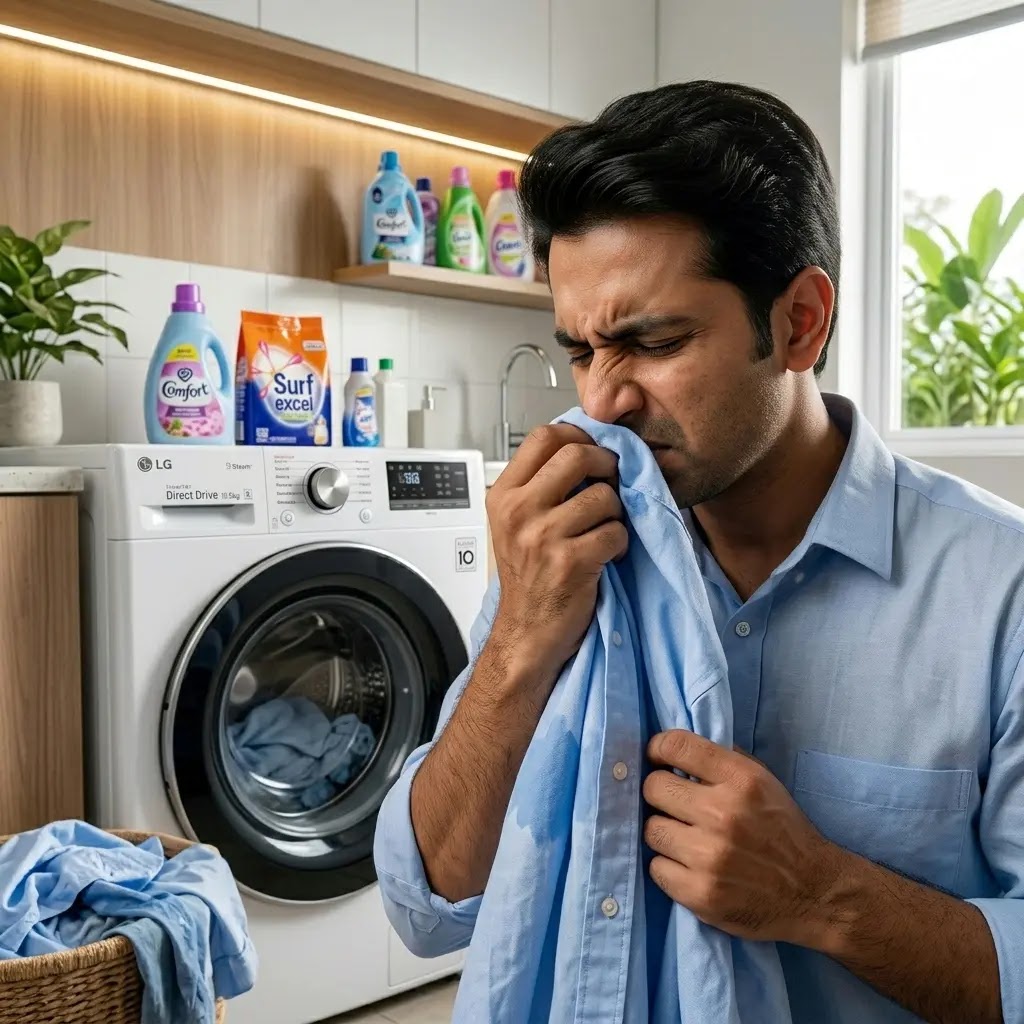
Pulled out a washed shirt, and it still smells like sweat. You aren’t alone. Modern LG front-loaders prioritize energy over water, but we can fix that safely.

⚡ The 5-Minute Stop the Smell Checklist
Before diving into technical settings, perform these 5 essential maintenance steps to eliminate 90% of odors:
- Drain Filter Clean-out: Open the small door at the bottom-left and unscrew the filter to remove rotting lint and hair.
- The Gasket Wipe-down: Pull back the grey rubber seal and remove any grey sludge or hidden mold.
- Airflow is Key: Never close the door fully after a cycle; leave it cracked open to let the drum dry.
- Detergent Audit: Stop using big caps of liquid soap. Switch to 2 tablespoons (max) of High-Efficiency (HE) detergent.
- Hot Tub Clean: Run the ‘Tub Clean’ cycle with a specialized descaler or bleach once a month.
Water & Performance
Eradicating Odors
1. The Truth About Water Levels in Modern LG Washers
The most common complaint from LG owners is My clothes are barely wet during the wash. It is a common misconception that the machine is broken. In reality, your LG washer is designed to use as little water as possible to meet international energy ratings.
However, this becomes a problem when washing thirsty fabrics like thick cotton towels, denim, or heavy hoodies. These items absorb the initial water fill instantly, leaving no free-flowing water to rinse away body oils, skin cells, and sweat. This creates a waxy buildup called biofilm inside the outer tub, which is the actual source of that rotten egg smell.
Related Guide: Keep your machine in top shape with our
How to Clean LG Washing Machine: Front & Top Load 2026 Guide.
2. How to Override Low Water Behavior (Safe Hacks)

You don’t need to be a technician to get more water into your machine. You can use the machine’s own sensors to your advantage. Here are three professional ways to trick the washer into a deeper fill:
A. The Pre-Wet Method
LG washers use Load Sensing at the beginning of the cycle. The motor spins the dry drum to measure weight. If you pour 1–2 liters (about half a gallon) of water over your dry clothes before starting, the machine will detect the extra weight of the soaked fabric. The computer will assume you have a much heavier load and will automatically provide more water during the wash.
B. Choose the Bedding or Bulky Cycle
The ‘Normal’ cycle is the most water-restricted setting. If your clothes smell, stop using them. The Bedding/Bulky cycle is programmed to expect high-absorbency items. It defaults to a higher water level and uses more aggressive rinsing to ensure fabrics are fully saturated.
C. The Water Plus and Extra Rinse Combo
Most LG models have a ‘Water Plus’ button. While it only adds about 10-15% more water, combining it with an ‘Extra Rinse’ ensures that the smelly biofilm doesn’t have a chance to settle back onto your clean laundry.
Pro Tip: If your machine is smelling and also struggling to spin or drain, the problem might be a hardware blockage. Check our LG OE Error Code & Drain Repair Guide before attempting further hacks.
3. Eradicating Biofilm: The Places You Forget to Clean

If you’ve run a tub clean and it still smells, the mold is hiding in the dark zones. These are the three areas most users overlook:
The Detergent Drawer Ceiling
Pull your detergent drawer out completely. Now, look up inside the hole where the drawer sits. You will likely see black mold spots on the ceiling (the spray plate). Because this area stays dark and damp, mold grows here and is washed directly onto your clean clothes every time the cycle starts. Scrub this with a toothbrush and white vinegar once a month.
Spotting stains? If you notice marks after washing, check out our
LG Washer Leaves Black Marks on Clothes? 5 Fast DIY Fixes!.
The Lower Gasket Folds
The grey rubber seal (bellows) has deep folds designed to catch water. However, they also catch hair, lint, and undissolved detergent. This creates a sludge that rots. Pull the rubber back carefully and wipe it down with a 10% bleach solution. If the mold is stubborn, soak paper towels in bleach, tuck them into the folds, and leave them overnight.
The Drain Pump Filter (The Odor Trap)
At the bottom-left of your LG front-loader is a small flap. Inside is a screw-off filter. This is the last stop for all the dirty water. If you haven’t cleaned this in 6 months, there is likely stagnant, rotting water sitting in the bottom of your machine. This smell can travel back up into the drum and contaminate your laundry.
To fix an LG washer that smells: stop using ‘Normal’ cycles for heavy loads, pre-wet your fabrics to trick the sensors, and clean the detergent drawer ceiling. These steps are 100% safe and will not void your warranty.
4. The Technician’s Corner: Adjusting the Pressure Switch

If you have tried all the behavioral hacks and your laundry still feels dry or dingy, there is a way to manually override the machine’s water limits. Every LG washer contains a Pressure Switch (Water Level Sensor). This sensor tells the computer when to stop filling water based on air pressure.
⚠️ PRO-LEVEL MODIFICATION: READ BEFORE PROCEEDING
The following steps involve hardware tampering. Please be aware:
- Warranty: Opening your machine and adjusting internal sensors will likely void your manufacturer’s warranty.
- Risk of Overflow: Over-adjusting the screw can cause the machine to overfill, leading to floods or FE (Overflow) error codes.
- Electrical Safety: Always unplug the power cord before removing any panels.
Proceed only if you are comfortable with basic tools and accept the risks.
How to Increase Water Level Manually:
- Locate the Sensor: Remove the two screws at the back of the top panel. Slide the lid back and lift it. The pressure switch is a small, circular plastic component (usually beige or black) with a thin rubber tube attached to it.
- The Adjustment Screw: In the center of the switch, you will see a small plastic screw. It is often covered in a red or blue factory sealant (Loctite) to prevent tampering. Carefully scrape a bit of this away.
- The 1-Turn Rule: Using a flathead screwdriver, turn the screw clockwise to increase the water level. Do not exceed 1.5 turns. Even one full turn can significantly increase the water line visible on the glass door.
- Testing: Reassemble the lid and run a Quick Wash cycle to observe the new water level. If it’s too high or triggers an error, turn the screw back slightly.
5. Regional Context: Why Your Geography Matters
Depending on where you live, your LG machine faces different challenges. Tailoring your approach to your local water and climate can drastically improve results.
| Region | The Challenge | Pro Strategy |
|---|---|---|
| North America (USA/Canada) | 120V Electrical limit (Slower water heating). | Use ‘Sanitary’ or ‘Extra Hot’ cycles to give the heater time to kill bacteria. |
| Europe & UK | Hard Water (Limescale buildup). | Add a descaler or 30% more detergent to counteract mineral interference. |
| Asia & Tropical Regions | High Humidity (Rapid mold growth). | Remove the detergent drawer completely overnight to ensure the internal paths dry out. |
Community Q&A: Your Top Concerns Answered
Q: I leave my door open, but my LG still smells like rotten eggs. Why?
Answer: Check the Spray Plate (the ceiling of the detergent drawer compartment). Most users forget this spot. Mold grows on the ceiling where water enters the drawer and sprays spores directly onto your clothes. Scrub it with a toothbrush and vinegar.
Q: Is powder detergent really better than liquid for odors?
Answer: Yes. Liquid detergents are often waxy and sticky, which feeds the biofilm. High-quality powder detergents are more alkaline and often contain oxygen bleach, which naturally inhibits mold and bacteria growth in the outer tub.
Q: Will adding vinegar to my wash ruin the rubber seals?
Answer: In moderation, no. Using white vinegar in the fabric softener compartment is a great way to break down detergent minerals. However, avoid using concentrated cleaning vinegar (high acidity) every single day, as it can eventually degrade thin rubber components over many years.
Conclusion: Reclaiming Your Freshness

Fixing an LG washer that smells bad or uses too little water requires a two-pronged approach: Hygiene and Logic. By maintaining the hidden zones, like the drain filter and the soap drawer ceiling, you remove the biological source of the odor. By using behavioral hacks like the Pre-Wet method or advanced hardware adjustments, you ensure your clothes get the saturation they need to actually get clean. Remember, a modern HE washer is a precision tool; it just needs a little pro-level guidance to perform at its best in 2026.
Maintenance Tip: To get the most out of your unit, follow our
LG Washing Machine Lifespan: 15-Year Maintenance Guide (2026).