
Table of Contents
Maytag Front Load Washers 2026: The Fresh Hold Hero or a High-Speed Liability?
Testing the 24-hour fan and the physics of the 1,200 RPM spin.
The Front-Load Dilemma: We’ve all been tempted by the sleek, stackable look of a modern front-loader. They promise to save $70/year in utilities and treat your clothes like royalty. But the $1,100 price tag comes with technical anxiety: Will it leak? Will it smell like a damp basement? Can it actually clean heavy jeans without a central agitator? After living with the 2026 Maytag lineup, here is the honest, technical truth.
1. HOW IT CLEANS: THE GRAVITY WASH LOGIC

Top-loaders use a central pole (agitator) to physically scrub dirt out. It’s effective but aggressive. Maytag’s 2026 front-loaders use Gravity Wash. The drum rotates on a horizontal axis, lifting your laundry to the top and letting it drop into a concentrated pool of soapy water.
This lift and Drop method uses the weight of the wet fabric to force dirt out. It is significantly gentler on expensive workout gear and woolens. If you are coming from a traditional machine, check our Maytag Top-Load 100-Load Teardown to see how this compares to the old Scrubbing method.
2. THE FRESH HOLD® FAN: NO MORE SWAMP SMELL
The #1 complaint about front-loaders is the musty odor caused by mold. Maytag front load washers are the best models and feature the Fresh Hold® System. This is a hardware-level intervention: a small internal fan at the back of the machine blows fresh air through the drum for up to 24 hours.
🕒 The 12-Hour Towel Test
I left wet towels in the machine overnight. In a standard washer, they would smell sour by morning. With Fresh Hold active, the machine tumbles for 12 seconds every few minutes while the fan circulates air. Result? The towels smelled perfectly fresh 12 hours later. This is a game-changer for busy families who forget laundry in the machine.
3. THE HIGH-SPEED SPIN: EFFICIENCY VS. VIBRATION
To cut your drying time in half, the Maytag front load washer spins at a staggering 1,160 to 1,200 RPM. This creates intense Centrifugal Force, pinning your clothes against the drum wall and squeezing every drop of moisture through the drainage holes. Your clothes come out damp-dry, saving you massive energy on the drying cycle.
Professional Advice: This speed is great on a concrete slab, but on a second-floor wooden laundry room, it can cause Floor Joist Vibration. If your house shakes, you might need to recalibrate your machine using the 30-Minute Maytag Maintenance Ritual to ensure the leveling legs are perfectly balanced.
4. THE INTERNAL HEATER: KILLING 99.9% OF BACTERIA
Standard warm water from your home tank (usually 120°F) isn’t hot enough to truly sanitize. Maytag’s front-loaders feature a Built-in Water Heater. This allows the machine to reach temperatures that kill bacteria and allergens, perfect for baby clothes and bedding. Note: This heater adds about 20-30 minutes to your cycle time, but the hygienic results are worth the wait.
5. THE GASKET REALITY: PREVENTING BLACK MOLD

The rubber seal (bellows) around the door is the most critical part of a front-loader. If you don’t manually pull back the rubber folds every month, you will find a treasure chest of pet hair, lint, and lost coins. Worse yet, stagnant water can pool in the seal, leading to black mold and that infamous laundry odor.
Maytag’s 2026 models feature tiny Drainage Ports at the 6 o’clock position of the gasket. If these get clogged with hair or gunk, the Fresh Hold fan can’t save you. Always wipe the seal dry and ensure these holes are clear. For a deep-clean guide, check our 30-Minute Maytag Maintenance Ritual.
6. INSTALLATION CRITICAL: THE SHIPPING BOLTS

This is the #1 mistake homeowners make. Maytag Front load washers come with heavy-duty Shipping Bolts in the back to keep the drum from banging during transport. If you forget to remove them before the first wash, the machine will jump or walk violently across your floor, potentially destroying your tiles and the internal Spider Arm bracket.
⚠️ Safety Check: If you hear a loud metal grinding sound during the spin cycle, stop the machine immediately. This often indicates a failed spider arm or a drum that has jumped its suspension.
7. THE MATCHUP: WHICH MODEL FITS YOUR LIFE?
| Feature | MHW8630 (Flagship) | MHW5630 (Workhorse) |
|---|---|---|
| Fresh Hold Fan | 24-Hour Active Fan | 12-Hour Fresh Spin (No Fan) |
| Soap Dispenser | Optimal Dose (8 Loads) | Single Load Drawer |
| Vibration Score | Advanced (AVC Plus) | Standard Vibration Control |
8. SMART FAQ: TECHNICIAN’S FIELD NOTES
Q: Why is my machine showing a SUD error?
This is a Suds Lock. You likely used regular soap instead of HE (High Efficiency) detergent. Regular soap creates too many bubbles, which can force moisture into the electronic boards. If this happens, run a Clean Washer cycle with no clothes to clear the system.
Q: Can I stack any Maytag dryer on top?
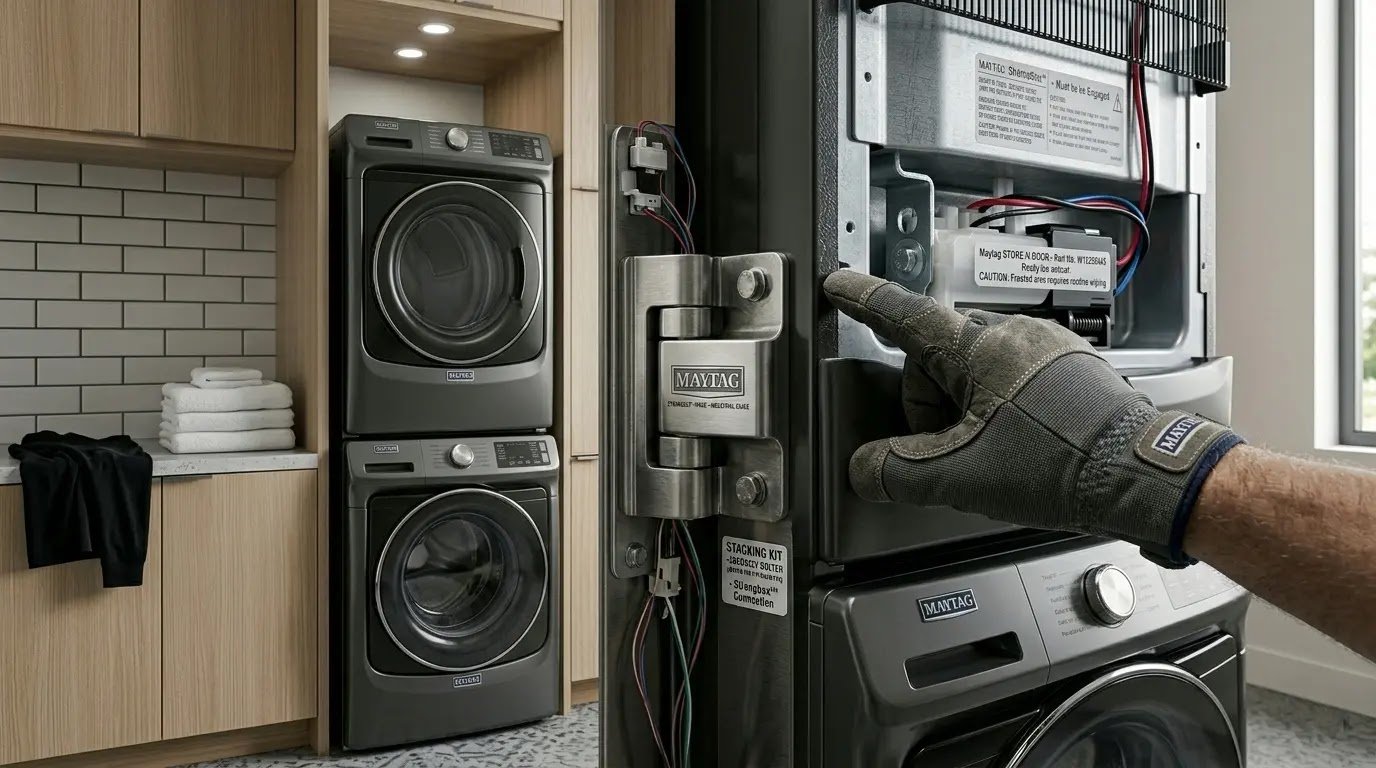
Only if you use the official Stacking Kit. High-frequency vibrations from a 1,200 RPM spin will cause an unsecured dryer to slide off. Never DIY a stacking solution with plywood or rubber mats.
Final Verdict: The Careful Owner’s Champion
The Maytag 2026 is a premier choice if you value high-tech sanitization and water savings. She is a high-maintenance queen. If you wipe the seal and clear the drainage holes, she will be a reliable workhorse for a decade. But if you ignore maintenance, you are looking at a $500 repair bill. It’s for the careful owner, not the careless one.