
Table of Contents
Bosch Refrigerator Ice Maker Not Working?
Is your Bosch refrigerator refusing to drop ice despite the bin being empty? In 2026, Bosch ice makers rely on optical sensors (infrared eyes) and strict temperature rules. Usually, it’s not a broken motor but a ‘software lockout’ caused by a frosted lens or a slight temperature dip. Before you spend hundreds on a technician, use this guide to bypass the 0°F rule, clean the optical eyes, and force a manual reset in under 15 minutes.
1. The Ice-Logic Diagnostic Table
Identify your specific failure point with this technical overview.
| Symptom | 2026 Tech Issue | Solution Level |
|---|---|---|
| No Ice, No Sound | Optical Sensor “Blindness” | DIY (Clean Lens) |
| Small/Hollow Cubes | Low Water PSI / Filter Trap | Easy (Replace Filter) |
| Ice Stuck in Tray | Thermal Logic Lock (Temp > 0°F) | Moderate (Adjust Temp) |
| Water Flooding Bin | Solenoid Valve Leak | Pro (Replace Valve) |
If your control panel is flashing a specific alphanumeric code alongside the ice maker failure, check our [Bosch refrigerator error code ] to decode the exact system fault.
2. Phase 1: Fixing Sensor Blindness (Optical Cleaning)
Most 2026 Bosch French Door models utilize infrared beam sensors. These sensors send an invisible light across the ice bin. If the light is blocked, the machine assumes the bin is full.
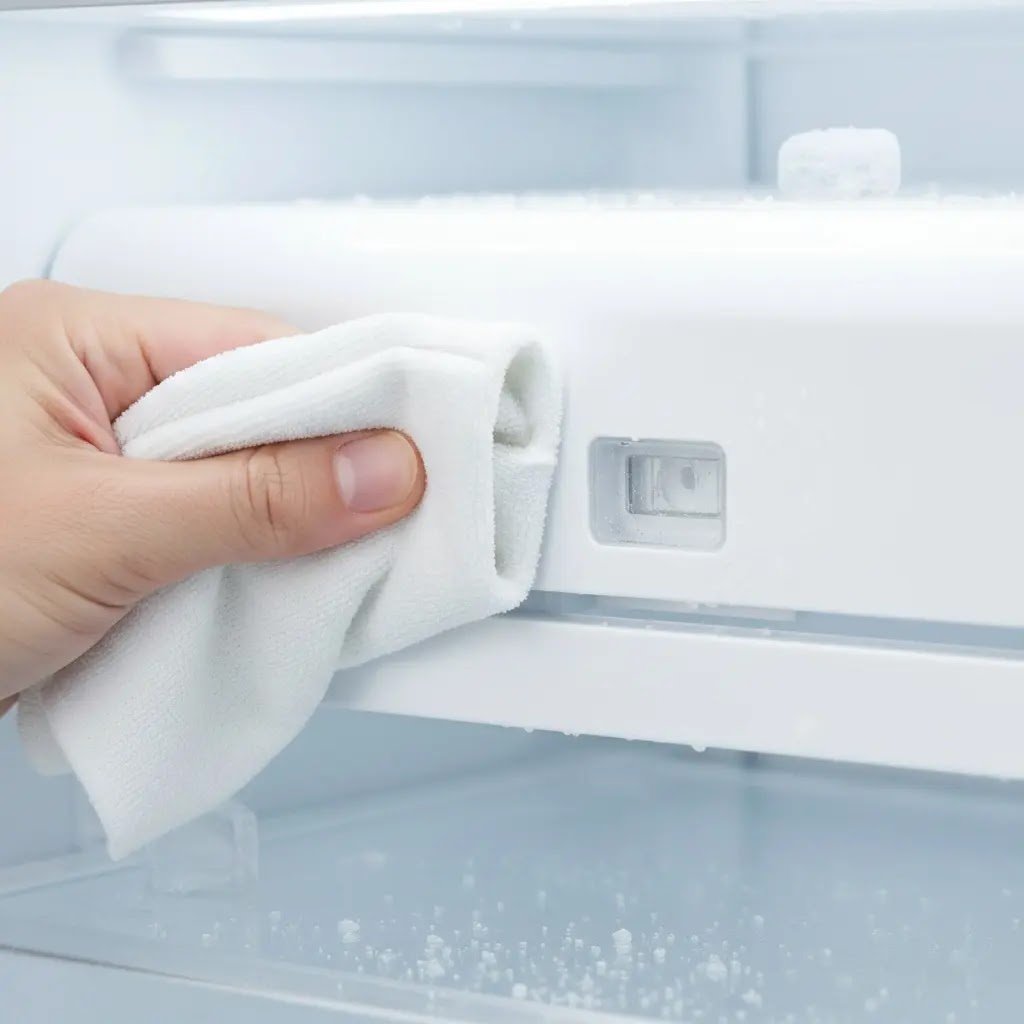
The Frost Glitch: Often, moisture from the freezer creates a thin layer of frost [tiny ice crystals] over the sensor’s lens. This frost scatters the light beam, tricking the computer into thinking the bin is overflowing.
The Fix: Locate the small plastic windows on the sides of the ice maker. Wipe them with a dry, lint-free cloth. Avoid chemicals, as they can etch the Polycarbonate [special transparent plastic]
and permanently ruin the sensor’s vision.
3. Phase 2: The 0°F Rule (Thermal Dynamics)

A Bosch ice maker is programmed to be incredibly stubborn. The software will not trigger the ejection cycle [the motor move that pushes ice out] unless the thermistor [the temperature-sensing chip] records a consistent 0°F (-18°C) for several hours.
- The Problem: If your freezer is set to 2°F or 3°F, it is cold enough to keep food frozen, but the ice maker will stay locked.
- The 2026 Hack: Activate the SuperFreeze or SuperCool function. This bypasses the standard thermostat and drops the internal temperature rapidly, which often wakes up the ice maker software.
Achieving the perfect thermal balance is tricky. If you’re unsure how to toggle the SuperFreeze mode, follow our step-by-step [guide on Bosch refrigerator temperature settings].
4. Phase 3: The UltraClarity Filter Trap

Bosch UltraClarity Pro filters are highly efficient but very sensitive. As the filter approaches its 6-month limit, the internal carbon blocks [filtering material] become dense with debris.
This creates a pressure drop. If the water pressure falls below 20 PSI (pounds per square inch), the ice maker’s inlet valve will not open fully. This results in hollow ice cubes or the system disabling itself to prevent solenoid overheating [electrical damage to the valve coil].
Searching Tip: If you suspect the filter, install a Bosch refrigerator water filter bypass plug. If ice starts falling, your filter was the bottleneck.
If your ice cubes are hollow, the pressure might be the culprit. You can [verify the PSI flow requirements for UltraClarity filters] to see if your home’s water pressure matches Bosch’s strict standards.
5. The Hidden Force-Cycle Reset Sequence
If there is no physical reset button, your Bosch uses a secret key combination to enter the service mode.
The 2026 Reset Procedure:
- Go to the main control panel on the door.
- Hold the Alarm and Fridge + buttons for 5 to 8 seconds.
- The screen will enter a diagnostic menu (displaying ‘S’ or ‘E’ codes).
- Navigate to the Force Ice test and press Enter.
What happens: The machine will ignore all sensors and manually turn the ice tray. This is the best way to determine if the motor is actually dead or just stuck in a software loop.
If the secret key combination doesn’t trigger the test, your specific model might have a unique software version. You can verify the exact steps in the [official Bosch refrigerator troubleshooting database] by entering your E-Nr number.
6. Mechanical Anatomy: The Inlet Valve

The water inlet valve uses solenoid coils [electrical magnets]. When the computer sends power, the magnet pulls a plunger open to let water in.
Diagnostic Sound Check:
- Humming but no water: The electrical part is good, but the valve is blocked by sediment [mineral buildup from your pipes].
- Complete Silence: The coil has likely short-circuited [burned out], and the valve requires full replacement.
7. 2026 Performance Checklist

- Floor Levelling: Bosch ice trays are precision-weighted. If the fridge leans too far back, the water will spill over the back of the tray before it freezes.
- Door Gasket Integrity: Check the rubber seal. If warm ambient air [room air] leaks in, it creates sensor fog, causing the optical system to fail.
- Clear the Error: After fixing a part, always use the Bosch ice maker reset code in the menu to clear the Fault History.
8. FAQ Section
How do I force my Bosch ice maker to cycle?
Enter the Service Menu using the Alarm/Temp buttons, or unplug the unit for 10 minutes to force a hardware reboot.
Why is the ice maker light blinking on my Bosch?
A blinking light is an error code. It usually means the tray didn’t return to the home position or the temperature is too high for safe production.
Can I use a third-party filter?
It is risky. 2026 Bosch models monitor flow velocity. If a non-genuine filter doesn’t match the specific PSI, the ice maker may stay deactivated.
Conclusion
Modern Bosch engineering is built on total precision. Your ice maker isn’t broken in the traditional sense; it is simply waiting for the perfect environment. By cleaning the optical sensors, lowering the temperature to 0°F, and ensuring high water pressure, you satisfy the machine’s digital logic and restore your ice supply.
Still struggling with Bosch’s high-tech sensors? If you’re considering a brand switch, see our [Bosch vs Whirlpool refrigerator reliability comparison] to see which one handles ice production better.